Oberheim MC2000 was a great master keyboard with onboard sounds. An OLED display brings it up to date and looks the part.
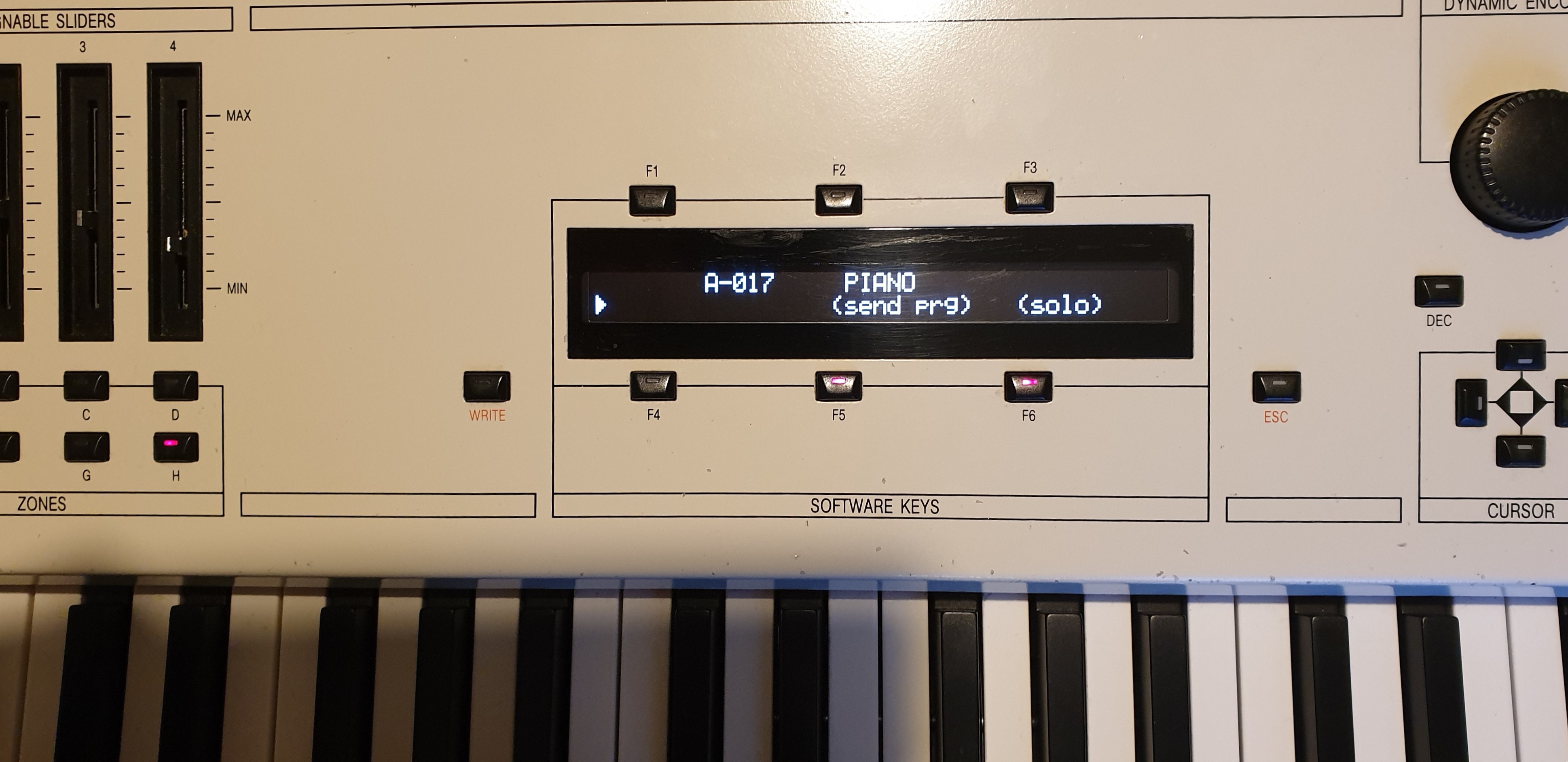
Fitting Notes
The fitment of this display is relatively straightforward but requires complete disassembly and reassembly before testing. In essence it is as follows:
- First remove the keyboard bed and connections so you just have the top control panel to work with. Then you have to remove the sound blaster (daughterboard) if fitted – then the master control board panel underneath until you get to the main control panel at the bottom. 3 in total boards to remove with all the jack connections etc.
- Fitting the new OLED display: the original LCD display just has a 16 pin DIL 90 degree socket fitted that is de-soldered and put on the new OLED module. Undo the 4 screws holding the old display and slide it out off of the connector. Then just pop the new OLED on and replace the screws.
The old display has a connector on the module that needs to be removed and pins 15 and 16 bent away or cut to disconnect the back-light connections. Alternatively, on the main panel board of the MC2000 (with all the switches and faders on it), cut the jumper wire from pin 15 to the power supply for the original LCD back-light display.
The old display and it’s connector are shown below:

Pins 15 & 16 are marked on the new OLED but are the top two pins shown in the picture above.
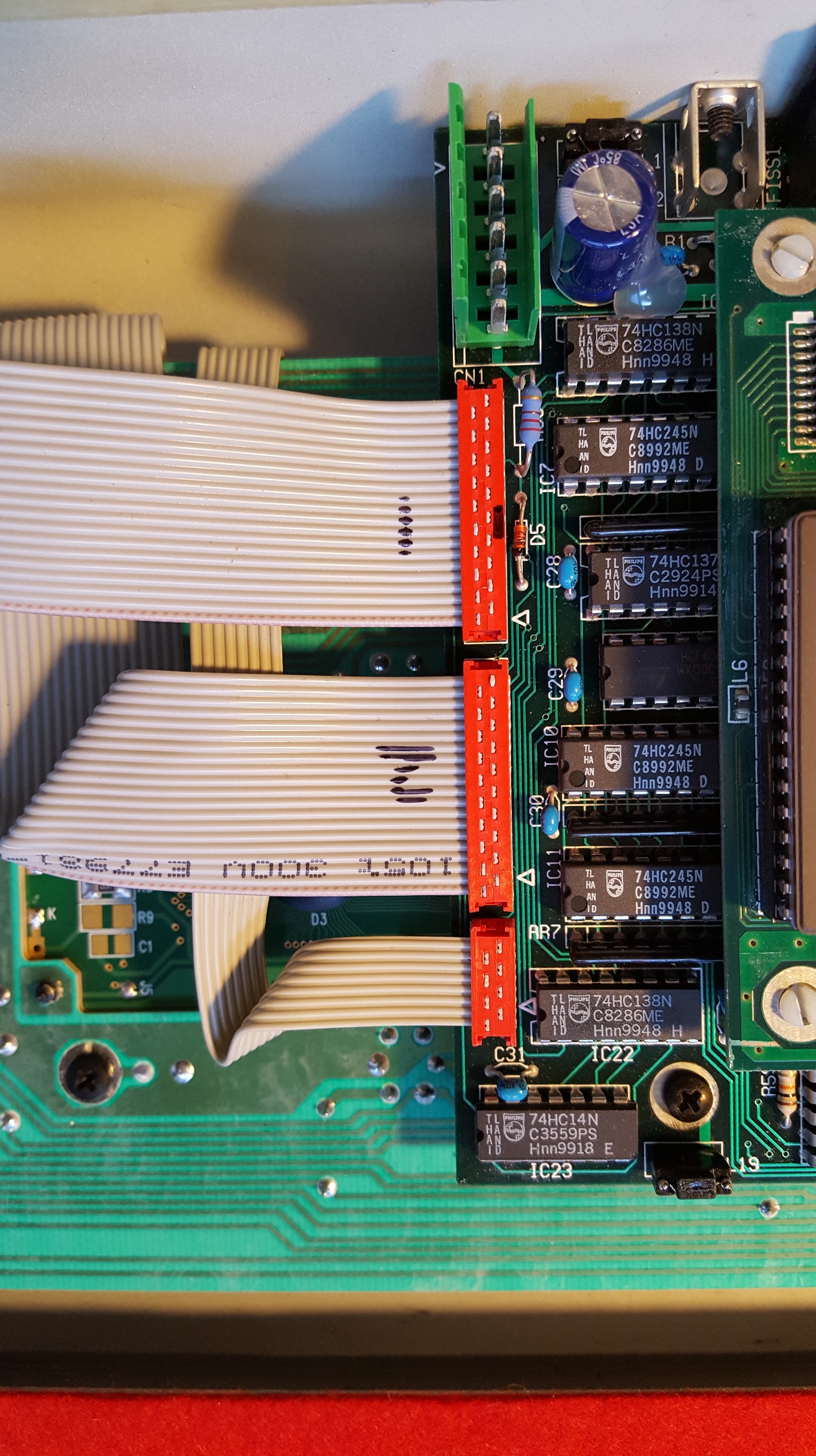
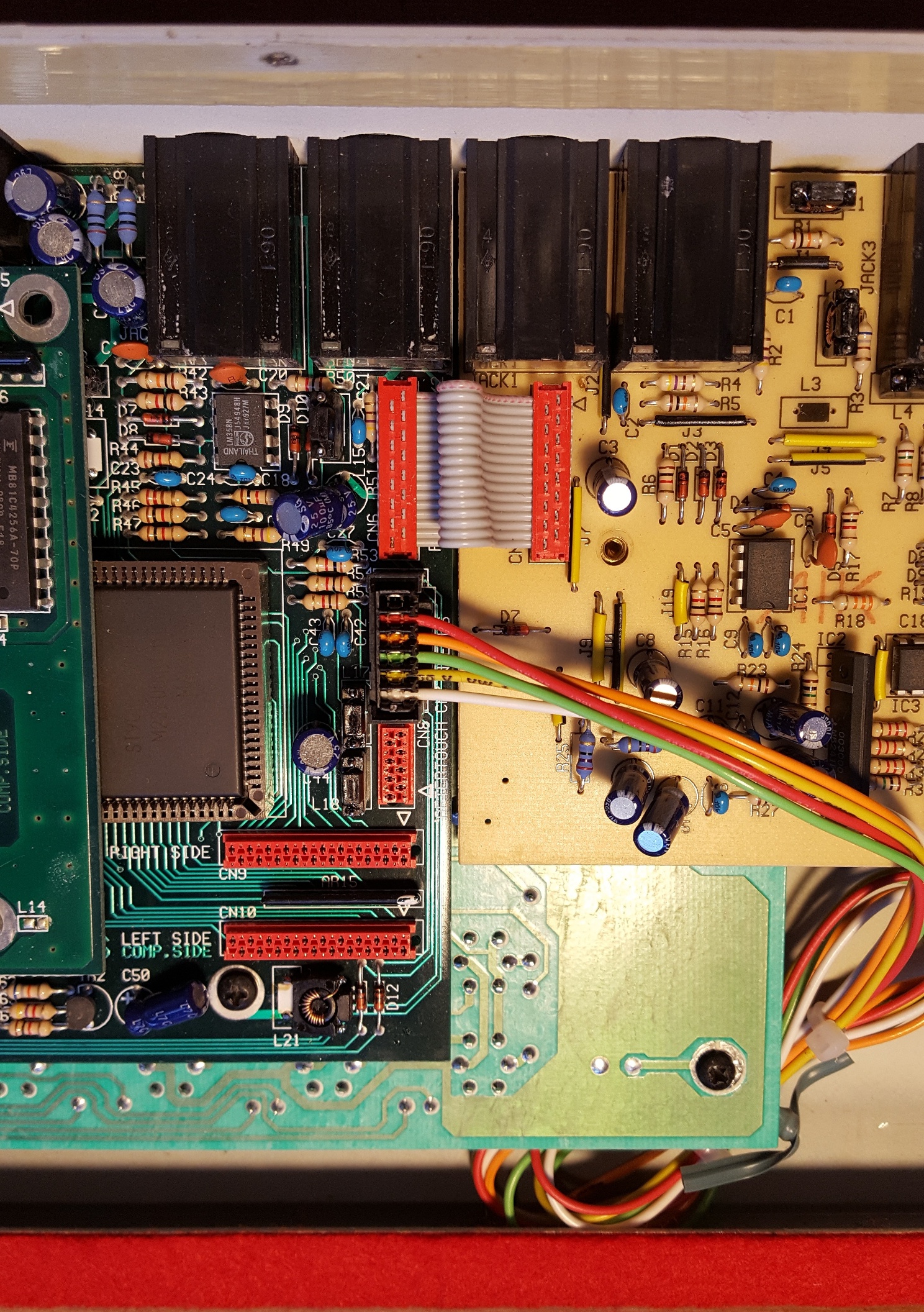
When you first open the instrument you will be faced with the mainboard as shown in the two pictures below:
OLED Availability
If you want one of the fully tested OLED displays used in this guide and up to the job of fitting it, I am happy to supply one. See my availability page for details. If you need a display fitting to an instrument or any other upgrade shown on this site we have a number of restorers and fitting partners available to help.
The display used is normally supplied as part of the JX10 or JX8P kits and was specially made to order. It has a very thin construction, small dimensions and a US2011 controller. The SuperJX applications were very tricky due to space requirements, so needed these characteristics.
See this guide to using our standard 40×2 OLED character module.
Copyright © 2024 Super Synth Projects, Guy Wilkinson
 Super Synth Projects
You must be logged in to post a comment.